Sleep apnea is a common sleep disorder in which there are pauses in breathing or shallow breaths taken whilst asleep. It is often characterised by snoring and daytime sleepiness.
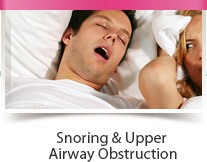
Snoring is a sound produced by the vibrations of the tissues of the nose and throat on breathing during sleep. Snoring is more common in men than women, and often increases with advancing age.
Hypersomnolence is a sleep disorder that causes excessive sleepiness. Hypersomnolence can be idiopathic (unknown cause) or may occur either due to a genetic predisposition or in combination with another health condition.
Circadian rhythm disorders are sleep disorders affecting the timing of sleep. People with circadian rhythm sleep disorders are usually unable to sleep and wake in the normal routines required to function in normal work, school, and social needs.
Narcolepsy is an uncommon problem characterized by the brain’s inability to control the normal sleep-wake cycle causing excessive daytime sleepiness with sudden bouts of irresistible sleep.
Sleep problems are common in children. Up to 30% of children less than 3 years old at some stage will have a sleeping difficulty. These can be divided into two categories: problems getting to sleep or problems staying asleep.
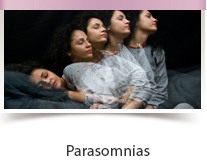
Parasomnia refers to the abnormal behaviours of sleep. Examples include; sleepwalking/talking, night terrors, sleep paralysis, REM sleep behavior disorder and sleep aggression and sleep related eating disorder.